PVC Pipe Extrusion for Telecommunication Infrastructure
Rollepaal helps pipe producers manufacture consistent and material-efficient PVC conduit for the protection of fiber-optic and communication cables.
PVC conduit for communication networks
Telecommunication networks depend on conduit systems that protect fiber-optic and communication cables from mechanical damage, moisture, and environmental influences.
For pipe producers, conduit manufacturing requires consistent outside diameter, wall thickness, and internal surface quality. These characteristics affect installation, cable pulling, and long-term network protection.
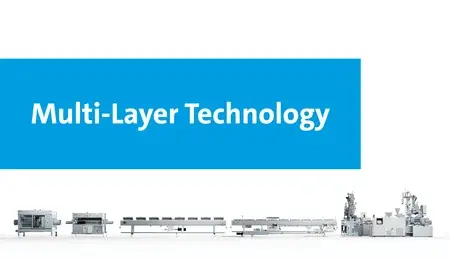
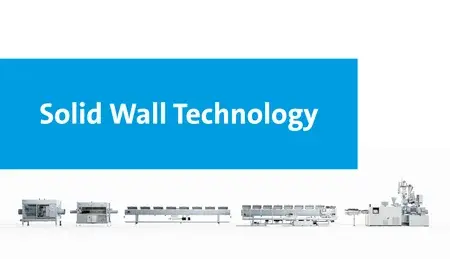
Rollepaal supports Solid Wall PVC conduit production and, where product specifications allow, Multi-Layer structures that can provide additional opportunities for material optimization.
Choose the right production technology
What PVC conduit needs to deliver
The conduit isn't the communication network itself, but it must provide a reliable, accessible pathway throughout the network's lifetime.
Protect communication cables
PVC conduit provides a physical barrier around fiber-optic and communication cables, helping protect them against soil, stones, moisture, and mechanical impact.
Support maintenance and upgrades
A consistent internal diameter and smooth bore make it easier to install, replace or add cables without reopening the complete route.
Identify different cable routes
Color-coded conduit helps network operators distinguish cable routes and services during installation, maintenance, and future expansion.
What determines efficient conduit production?
High-volume conduit production depends on consistent dimensions, stable extrusion, and efficient raw-material control.
Maintain pipe dimensions
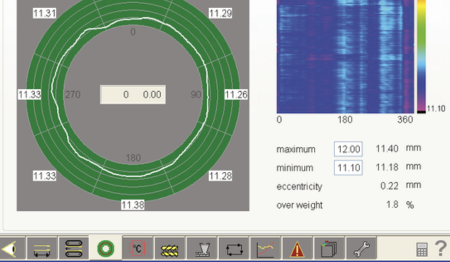
Stable extrusion and downstream control help maintain outside diameter, wall thickness, and roundness throughout long production runs.
Maintain a smooth bore
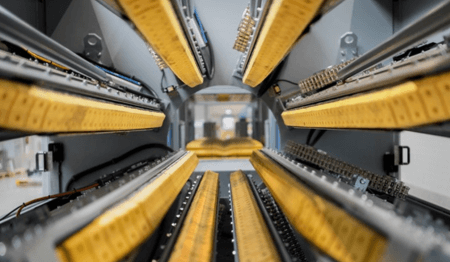
Stable processing and die-head performance help create a consistent internal surface and geometry for reliable cable installation.
Control material use
Gravimetric feeding and accurate measurement help reduce unnecessary overweight while keeping the conduit within specification.
Conduit requirements vary by market
Regional and application-specific standards define pipe dimensions, materials, and performance requirements. A production line therefore needs the flexibility and process stability to manufacture conduit to the target market's specifications.
Related technical knowledge
Explore the design, measurement, and process principles behind consistent PVC conduit production.
Common questions about PVC conduit production
PVC conduit provides a durable physical pathway that protects communication cables from mechanical damage, moisture, and environmental influences. It also allows cables to be installed, replaced, or upgraded without excavating the complete route again.
Solid Wall extrusion is a common production route for rigid PVC conduit. Multi-Layer technology can also provide opportunities for material optimization where the required product structure and applicable standards allow it.
Consistent outside diameter, wall thickness, roundness, and internal surface quality are important for installation and cable pulling. Stable extrusion, accurate material feeding, and dimensional measurement help keep these characteristics within specification.
Which technology fits your conduit production?
Our process specialists can help evaluate the right extrusion technology based on your conduit dimensions, product specifications, material strategy, and production objectives.