PVC Pipe Extrusion for Gas Distribution

Rollepaal supports the production of rigid PVC pressure pipe for gas distribution applications in markets where PVC piping systems are permitted by the applicable standards.

PVC pipes for gas distribution

PVC has a long history in underground gas-distribution networks in selected markets, particularly in low-pressure systems using impact-modified PVC.

Gas-pipe applications require strict material toughness, long-term pressure performance, dimensional consistency, joint integrity, and quality control. The applicable material, pressure class, pipe design, and certification requirements depend strongly on the market in which the pipe will be installed.

Rollepaal's extrusion technology provides the process control required for consistent rigid PVC pressure-pipe production.
 Solid Wall PVC extrusion

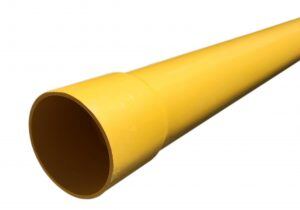
Solid Wall extrusion produces a homogeneous pipe structure and provides the appropriate production principle for rigid PVC pressure pipe.

Stable material feeding, controlled gelation, accurate die-head performance, cooling, and dimensional control are essential for producing pipe with repeatable mechanical and dimensional properties.

What gas-distribution pipe needs to deliver

Gas distribution is a safety-critical pressure application. Pipe performance depends on both the material specification and consistent manufacturing quality.

Long-term pressure performance

The pipe material and wall design must perform reliably under sustained internal pressure throughout the intended service life.

Toughness and impact resistance

Gas-pipe materials must provide the toughness required by the applicable standard and installation conditions, including resistance to damage during handling and underground service.

Consistent pipe quality

Wall thickness, dimensions, gelation, material properties, and joint compatibility must remain controlled throughout production.

Gas-pipe requirements are market-specific

PVC gas-distribution pipe is not a globally standardized application like PVC water or sewer pipe. Material types, allowable operating pressures, joining methods, and certification requirements vary considerably between markets.

ISO 6993, for example, defines buried high-impact PVC (PVC-HI) piping systems for gaseous fuels with a maximum operating pressure of 1 bar. In the Netherlands, specific Kiwa requirements cover impact-modified PVC for low-pressure gas distribution. Other markets use different materials and standards.

Therefore, always establish the target specification before defining the extrusion-line configuration.

What determines consistent gas-pipe production?

Producing a pressure pipe to specification requires close control of material preparation, extrusion conditions, and final pipe dimensions.

Control material processing

Stable formulation, mixing, feeding, and extrusion conditions are essential for consistent gelation and mechanical properties.

Maintain wall thickness

Stable output, die-head performance, cooling, and haul-off control help maintain the required pipe dimensions and wall distribution.

Verify production quality

Measurement, process monitoring, and quality testing help confirm that the pipe remains within the required dimensional and performance specifications.


Related technical knowledge

Explore the material, design, and testing principles behind reliable PVC pressure-pipe production.

Common questions about PVC gas-pipe production

Does your market specify PVC for gas distribution?

Our process specialists can help evaluate the required extrusion technology based on your material specification, pipe dimensions, pressure requirements, production targets, and applicable market standards.